
Common orthodontic appliances are specialized devices your orthodontist uses to move teeth, guide jaw growth, correct bite issues, and stop habits that affect your smile. Braces get most of the attention, but they’re only one of many tools we use. Depending on your age, growth stage, and specific concerns, your treatment plan may include expanders, retainers, headgear, habit appliances, or clear aligners.
At Orthodontic Associates, Dr. Gregory Hummon, Dr. Thomas Gebeck, and Dr. Alexandra Kalabat-Semma work with patients of every age across our Birmingham and Grosse Pointe Farms locations to design care plans built around each patient. This guide walks you through the most common orthodontic appliances, what each one does, and what to expect if one is part of your smile plan.
Why Orthodontic Treatment Often Involves More Than Braces
Orthodontics isn’t just about straightening teeth. It’s about how your teeth, jaws, bite, and oral habits all work together. Some issues, like a narrow upper jaw or a strong thumb-sucking habit, can’t be corrected with brackets and wires alone.
Appliances generally fall into two categories:
- Fixed appliances: Bonded or cemented in place by your orthodontist and worn 24/7.
- Removable appliances: Taken in and out by the patient, with wear time depending on the plan.
Age and growth stage matter too. Younger patients often benefit from early interceptive treatment (sometimes called Phase 1), which uses appliances to guide jaw growth while bones are still developing. Older kids, teens, and adults typically move into Phase 2, where braces or aligners refine tooth position. Your doctor will recommend the right approach based on a full exam and imaging.
Quick Comparison of Common Orthodontic Appliances
| Appliance | Fixed or Removable | Main Purpose | Typical Age Range |
|---|---|---|---|
| Palatal Expander | Fixed | Widen upper jaw | Children, preteens |
| Herbst Appliance | Fixed | Correct overbite / Class II | Growing patients |
| Twin Block | Removable | Guide lower jaw forward | Children, teens |
| Headgear | Removable | Bite correction, jaw guidance | Growing patients |
| Elastics | Removable | Fine-tune bite with braces | Teens, adults |
| Space Maintainer | Fixed | Hold space for adult tooth | Children |
| Retainer | Fixed or Removable | Prevent shifting after treatment | All ages |
| Clear Aligners | Removable | Straighten teeth discreetly | Teens, adults |
Appliances That Expand or Reshape the Jaw
Some patients need more room in their mouth before teeth can be straightened. Jaw-development appliances create that space and help correct skeletal issues while a child is still growing. These devices work best in younger patients, when the bones respond more easily to gentle pressure.
Palatal Expanders
What is a palatal expander? A palatal expander is a fixed appliance that gently widens the upper jaw over time. It’s often used to correct crossbites, relieve crowding, or make room for teeth that haven’t erupted yet.
Most of our patients use a rapid palatal expander, turned daily at home with a small key to widen the jaw quickly.
Most patients wear an expander for several months. You may notice mild pressure or a temporary gap between the front teeth in the first few days, which is a normal sign the appliance is working.
Herbst Appliance
The Herbst appliance is a fixed orthodontic device that gently repositions the lower jaw forward. It’s commonly used to correct overbites and Class II bite issues in growing patients. It’s typically worn for about a year and is often paired with braces to align the teeth at the same time.
Because it’s cemented in place, compliance isn’t an issue. You simply wear it, and it does its job.
Twin Block Appliance
The twin block is a two-piece removable orthodontic appliance that guides the lower jaw into a healthier position. It’s a popular choice for children and teens with overbites who are still growing.
Unlike fixed options, the twin block only works when it’s in the mouth, so consistent wear is essential. Your doctor will explain exactly how many hours per day are needed for the best outcome.
Appliances That Guide Tooth and Jaw Alignment
Some appliances work alongside braces to fine-tune the bite or apply force in a specific direction. Compliance is often the key factor here. The more consistently you wear them, the smoother your treatment progresses.
Headgear
Modern headgear is worn primarily at home and overnight, so most patients never wear it in public. It attaches to bands on the back teeth and uses gentle external force to correct severe bite issues or guide jaw growth in growing patients.
It looks intimidating, but it’s a highly effective option when used as directed.
Elastics (Rubber Bands)
Elastics are small rubber bands you hook between your upper and lower braces. They apply directional force to help move teeth into a better bite relationship.
You’ll change them several times a day, and your doctor will show you exactly how to place them. Wearing elastics as prescribed has a direct impact on how quickly your treatment finishes.
Lip and Cheek Bumpers
Lip and cheek bumpers hold the lips or cheeks away from the teeth to relieve pressure and create more room for erupting teeth. They’re typically used during mixed dentition, when baby teeth and permanent teeth are both present.
Bumpers are especially helpful for patients whose muscle pressure is contributing to crowding.

Appliances That Preserve or Maintain Space
Moving teeth into place is only half the work. Keeping them there, or holding space for teeth that haven’t come in yet, is just as important. These appliances protect the alignment you’ve worked hard to achieve.
Space Maintainers
When a child loses a baby tooth early, nearby teeth can drift into the empty space and block the permanent tooth from erupting properly. A space maintainer holds that spot open until the adult tooth is ready to come in.
Common designs include the band-and-loop and lingual arch. They’re small, comfortable, and typically go unnoticed after a few days.
Retainers (Hawley, Essix, and Fixed)
Retainers keep your teeth from shifting back after active treatment. Long-term retainer wear is one of the most important parts of keeping teeth in place.
There are three main types:
- Hawley retainer: A durable acrylic-and-wire design that can be adjusted over time.
- Essix retainer: A clear, thin plastic tray that fits over the teeth.
- Fixed retainer: A thin wire bonded to the back of the front teeth for around-the-clock retention.
Which retainer is best? It depends on your case, lifestyle, and preference. Your doctor will recommend the option that fits your smile best.
Appliances That Correct Oral Habits
Habits like thumb-sucking and tongue thrusting can affect how teeth erupt and how the bite develops. Left unaddressed, they can lead to open bites, speech issues, or narrow jaws. Habit appliances gently interrupt the behavior so teeth and jaws can develop as they should.
Thumb-Sucking and Tongue-Thrust Appliances
These small fixed appliances attach to the upper teeth and act as a gentle reminder to stop the habit. They don’t hurt. They simply make thumb-sucking or tongue-thrusting less rewarding.
Most children wear them for several months, and habits often resolve within the first few weeks.
Clear Aligners: A Modern Alternative
Clear aligners are removable plastic trays that gradually shift teeth into place. They’re a popular option for teens and adults who want a lower-profile treatment. Invisalign is the most well-known brand and one we offer at our practice.
A few things to keep in mind:
- Aligners should be worn 20 to 22 hours per day, per manufacturer guidance, for best results.
- They’re removable for eating, brushing, and flossing.
- Not every case is a good fit. Some bites and tooth movements are better handled with braces or additional appliances.
A free consultation is the best way to find out if aligners are right for you.
How Your Orthodontist Chooses the Right Appliance
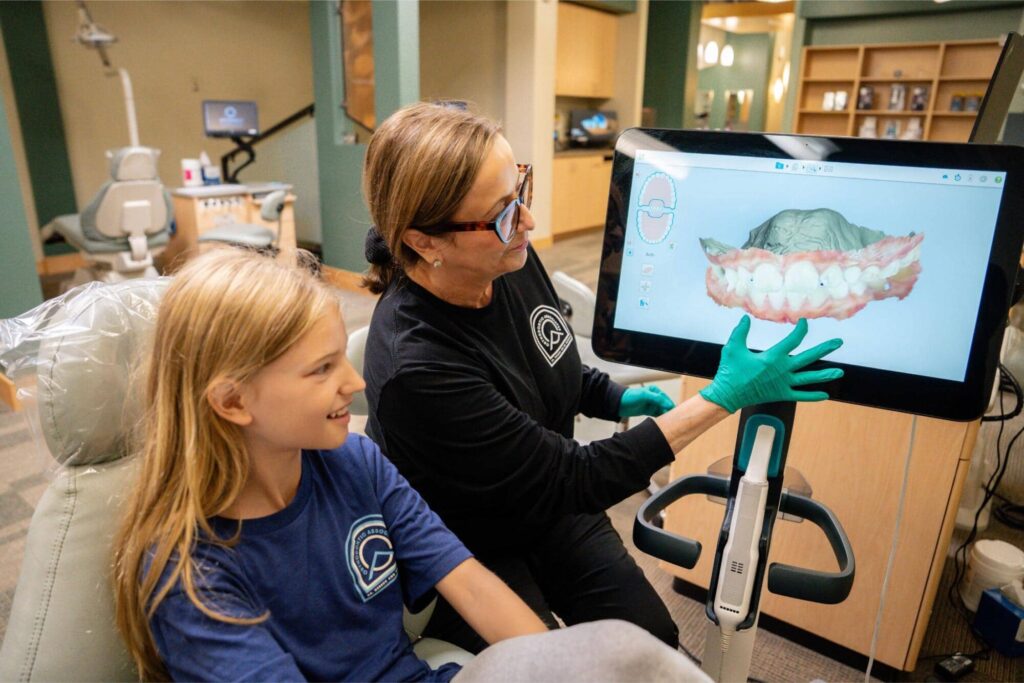
Every smile is different, so every plan is different too. When you visit Orthodontic Associates in Birmingham or Grosse Pointe Farms, Dr. Hummon, Dr. Gebeck, or Dr. Semma will start with a thorough exam, digital scans, and panoramic imaging. From there, they consider:
- Your age and growth stage
- The severity of the bite or alignment issue
- Your lifestyle, activities, and preferences
- How different appliances would work together
The result is a plan built around your needs. Great questions to ask at your free consult include: Why this appliance? How long will I wear it? What does daily care look like? What happens if I lose or break it?
Caring for Orthodontic Appliances Day-to-Day
Good daily habits protect your appliance and keep treatment on track. Here’s what helps most:
- Clean fixed appliances thoroughly. Brush around wires, bands, and brackets with a soft-bristle toothbrush and use a water flosser or interdental brush.
- Rinse and brush removable appliances. Take them out to clean with a soft brush and mild soap. Avoid hot water, which can warp plastic.
- Avoid sticky, hard, and crunchy foods. Caramel, ice, popcorn kernels, and hard candy are common culprits behind broken brackets and cracked retainers.
- Manage initial soreness. A soft-food diet, warm saltwater rinses, and orthodontic wax help during the first few days.
- Call us when something feels off. A loose band, poking wire, or lost retainer is worth a quick call. We’ll walk you through what to do next.
Frequently Asked Questions
Are orthodontic appliances painful?
No, most orthodontic appliances aren’t painful. They typically cause mild soreness or pressure for a few days after placement or adjustment, which is a normal sign that things are moving. Over-the-counter relief and soft foods usually help you feel comfortable again quickly.
How long are appliances typically worn?
Wear time depends on the appliance and your specific needs. Expanders and habit appliances often stay in for several months, while Herbst appliances and full orthodontic treatment can last a year or more. Retainers, on the other hand, are worn long-term to protect your results.
Can adults use these appliances too?
Yes, adults have plenty of options. While many appliances are designed for growing patients, retainers, clear aligners, elastics, and braces all work well for adult patients. Your doctor will recommend the best fit for your case at your consultation.
Are appliances used with or instead of braces?
Both. Some appliances (like expanders and habit devices) are used before or alongside braces to prepare the mouth or address specific issues. Others (like clear aligners) can replace braces entirely for the right patient.
Does insurance cover orthodontic appliances?
Many dental and orthodontic insurance plans cover part of the cost of common orthodontic appliances. We’re happy to review your benefits during your free consult so you know what to expect before treatment begins.
Curious which of our appliances is right for you or your child? Schedule a free consultation with Dr. Hummon, Dr. Gebeck, or Dr. Semma at our Birmingham or Grosse Pointe Farms office to learn more. We can’t wait to welcome you to our practice family.